100 Amp vs. 200 Amp Panel: Which One Do You Need?
A real assessment before the number, a written price before anything opens, and a permit filed as part of the job.
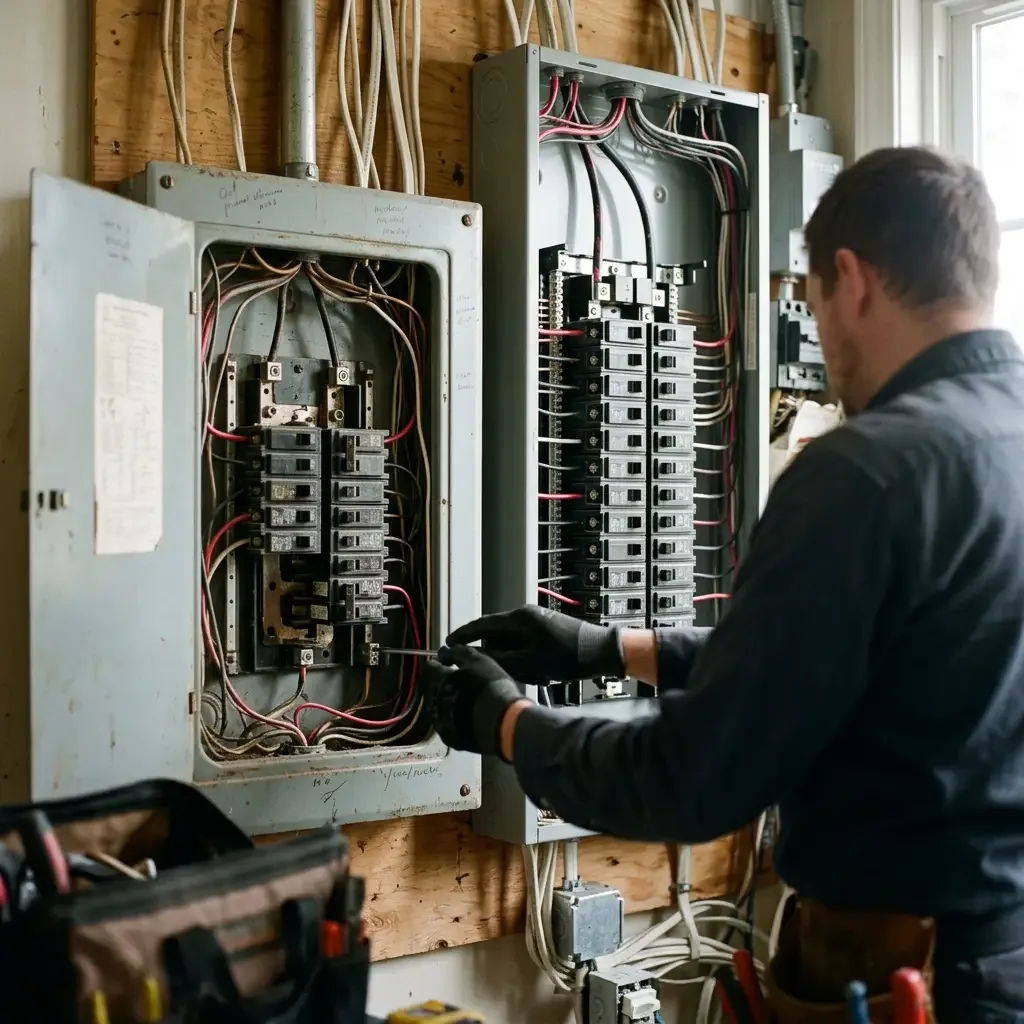
Should I get a 100 amp or 200 amp panel?
200 amps is the right call for most homes today, but 100 amps is still genuinely enough for a smaller house with gas heat and no major electric additions planned.
The honest answer comes from a load calculation, not a rule of thumb, but the pattern below covers most real situations in this market's mix of older beach cottages, inland ranch homes and newer subdivisions.
What 100 Amps Still Handles Fine
A 100-amp panel comfortably runs a smaller to mid-size home with gas heat, a gas or standard electric water heater, and a typical mix of lighting, outlets and kitchen appliances. Plenty of homes across this market's older inland stock, Conway and parts of Socastee among them, run on original 100-amp service without issue.
Where 100 amps stops being enough is additions, not day-to-day use: an EV charger, a hot tub, a whole-home generator, or converting from gas to an all-electric heat pump and water heater all add meaningful load on top of what the panel already carries.
Why 200 Amps Became the Default
New construction across this market, Carolina Forest and the newer sections of Market Common included, is built to 200-amp service as a baseline, because it covers the common load combinations (central air, an electric range, a dryer, and room for an EV charger later) without a second panel change down the road.
For an older home being upgraded rather than built new, 200 amps is the practical ceiling most homeowners land on: enough headroom for the additions people actually make (EV charger, generator, hot tub) without paying for capacity a typical single-family home will never draw.
When 400 Amps Is Actually the Right Call
400-amp service is the exception, not a bigger-is-better upgrade. It typically applies to homes over roughly 3,500 square feet running two or three AC units, or a combination of a heat pump, multiple EV chargers, a hot tub and a standby generator on one service. Outside that profile, 400 amps is usually more capacity than the home will ever use.
Side by Side: Which Amperage Fits Your Home
Compared onTypical home profileHeadroomRelative cost
100 amps
Best forSmaller homes, gas heat, no major electric additions planned
- Lower replacement cost when only a safety-driven swap is needed
- Genuinely sufficient for a lot of homes as-is
- Little to no room for an EV charger, generator or major appliance addition
- Some buyers and lenders flag it as dated regardless of actual performance
200 amps
Best forMost homes adding an EV charger, generator, central air, or planning any of those within a few years
- Real headroom without a second panel change later
- The standard for new construction and most recent renovations
- Higher upfront cost than a like-for-like 100-amp swap
- More capacity than a genuinely modest, unchanging load needs
400 amps
Best forLarge homes with multiple high-draw systems: several AC units, multiple EV chargers, a hot tub, a whole-home generator
- Covers combined loads that would overload even a 200-amp service
- Significantly more expensive than 200 amps
- Unnecessary for the vast majority of single-family homes in this market
Most homeowners in this market who are upgrading should target 200 amps if an EV charger, generator or major addition is realistically coming. Stay at 100 amps if your loads are modest and staying that way. Go to 400 amps only if a load calculation on a genuinely large home shows the combined draw actually needs it — don't upgrade to 400 amps because it sounds like more safety margin.
How a Load Calculation Settles It
A load calculation adds your home's general lighting and receptacle load, major appliance nameplate loads, HVAC, and any planned additions, applies the code's demand factors for loads that don't all run at once, and compares the total against what each panel size can safely carry.
That's the difference between a real answer and a guess: two houses that look identical from the street can land on different recommendations depending on what's actually running inside them.
100 Amp vs. 200 Amp Panel: Which One Do You Need? — questions
Not automatically. A smaller home with gas heat and no major electric additions can run fine on 100 amps. It becomes too small the moment you add an EV charger, a generator, or convert major appliances from gas to electric.
Mostly home size and combined high-draw systems: a house over roughly 3,500 square feet with multiple AC units, or a mix of a heat pump, several EV chargers, a hot tub and a standby generator all on one service.
Yes, to a degree. 200 amps costs more than a like-for-like 100-amp swap, and 400 amps costs meaningfully more than 200. If your loads are genuinely modest and staying that way, paying for headroom you'll never use isn't the safe default; it's just extra cost.
A load calculation during a panel upgrade site visit is the real answer. It adds up your home's actual and planned electrical demand against code-defined rules, rather than relying on a rule of thumb.
Licensed, insured panel upgrades, breaker box replacement and meter base work for Myrtle Beach and Horry County.
- 01Licensed & insuredEvery job is performed by a licensed, insured electrician working to South Carolina electrical code.
- 02Fixed written pricingThe number you see after the load calculation is the number you pay. It doesn't move once the panel's open.
- 03Permits handledThe permit gets filed and the inspection gets scheduled as part of the job, not left for you to arrange.
- 04One focused serviceThis is a panel-focused practice, not a full-service electrical shop. That means less guessing on this one job type, not more upsell.
Request a quote
Tell us what your panel looks like now (age, brand if you know it, any breaker trouble) and we'll call back with next steps.
Ready for a written price?
A short site visit turns this guide into a real number for your specific home instead of a general rule.